In today’s digital world, our children are constantly bombarded by external noise, notifications, social media trends, and the relentless pressure to perform.
The quiet voice of their own heart is often drowned out by the scream of a thousand screens.
As a parent, you understand that academic success is only one piece of the puzzle. You want more for them. You want them to be grounded, resilient, and deeply aware of who they are in a world that is constantly trying to tell them who they should be.
Self-awareness isn’t just a "soft skill" or a psychological buzzword. It is the very foundation of emotional intelligence and future leadership.
It is the difference between a child who reacts to life and a child who responds to it.
But here is the truth we often miss: creating a self-aware child doesn’t require hour-long therapy sessions or complicated curriculum. It happens in the small, intentional moments of the everyday.
It happens in just five minutes a day.
We often think that "big" growth requires "big" time investments.
We wait for the summer camp or the weekend retreat to teach our kids life lessons. But character isn’t built in a weekend; it’s forged in the daily routine.
Self-awareness is the ability to recognize one’s own emotions, thoughts, and values, and understanding how they influence behavior. It is about stewardship.
In Proverbs 4:23, we are told to: "Keep your heart with all vigilance, for from it flow the springs of life."
Teaching our children self-awareness is simply teaching them how to "keep their heart." It is giving them the tools to guard their inner world so they can impact the outer world for good.
Let’s talk about how you can integrate this into your busy schedule without adding another "to-do" that feels like a burden.

Imagine starting the day by actually checking the "weather" inside your child’s heart.
Most of us rush our kids out the door with a "hurry up" and a "don’t forget your lunch." We focus on the logistics of the day while ignoring the internal state of the person living it.
A "Feelings Forecast" is a simple, two-minute ritual you can do over breakfast or in the car on the way to school.
Ask your child: "If your mood right now was the weather, what would it be?"
Are they "sunny" and excited? "Cloudy" and a bit unsure? Or perhaps "stormy" because they didn’t sleep well or are worried about a test?
This isn't about fixing the weather; it’s about noticing it. When a child names an emotion, it loses its power to control them.
This simple act of naming builds a bridge between the feeling and the intellect. It teaches them that emotions are information, not a final destination.
If they can name it, they can manage it.
Our bodies often know we are stressed before our minds do.
Think about the last time you were frustrated, your shoulders probably tightened, or your jaw clenched. Kids are the same, but they lack the vocabulary to connect the physical sensation to the emotional state.
You can use "Body Scans" during transitions, like when they move from screen time to homework time, or from school to home.
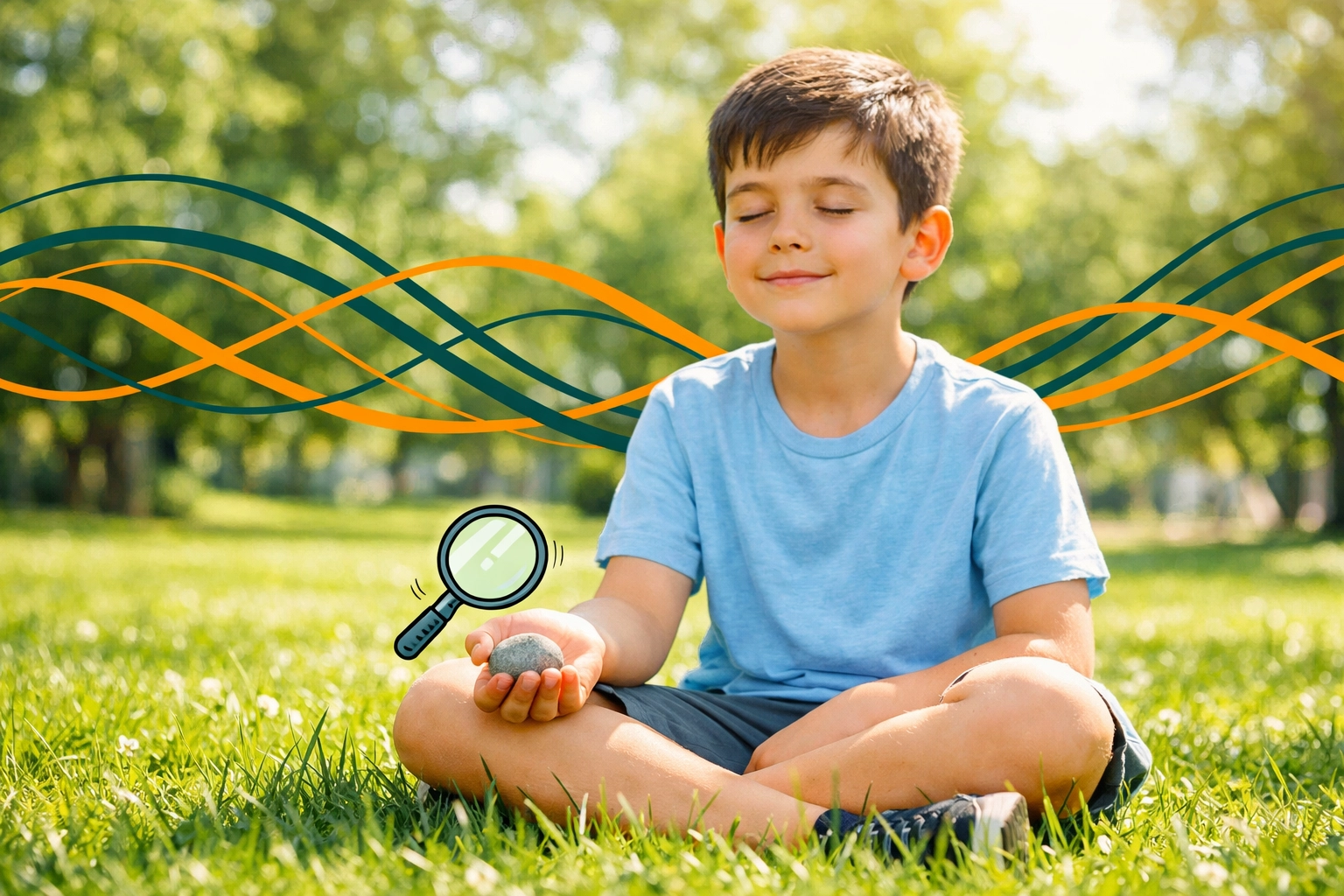
Ask them to close their eyes for just 30 seconds and "scan" from their toes to their head.
"Do your legs feel wiggly? Is your tummy tight? Are your hands clenched?"
By teaching them to listen to their physical cues, you are giving them an early-warning system. A child who notices their tummy is tight before a big game can learn to breathe through the anxiety rather than lashing out in frustration.
It is a vital life skill that many adults still haven't mastered.
In moments of high emotion, whether it’s a toddler’s meltdown or a teenager’s anxiety, self-awareness often goes out the window.
When the "fight or flight" response kicks in, the brain's logical center shuts down. The goal of self-awareness here is to bring them back to the present moment.
The 5-4-3-2-1 technique is a powerful grounding tool that takes less than three minutes:
This shifts the focus from the internal chaos to the external reality. It teaches the child that they are not their feelings; they are the observer of their feelings.
You cannot manage what you cannot define.
Most kids have a very limited emotional vocabulary: happy, sad, mad. But life is lived in the nuances.
There is a massive difference between feeling "mad" and feeling "disappointed." There is a difference between being "scared" and being "overwhelmed."
Use two minutes a day to introduce a "word of the day" for emotions. Put it on the fridge.
Instead of asking, "How was your day?" (which usually gets a one-word answer), ask, "What was a moment today where you felt 'courageous'?" or "When did you feel 'frustrated' today?"
By expanding their vocabulary, you are expanding their ability to understand themselves.
This is a core component of our Complete Life Skills Platform, where we dive deep into the emotional intelligence skills that schools often skip.
For just £19.99, you can access the full bundle of resources designed to help your child navigate these complex internal landscapes.
The most powerful tool for creating a self-aware child is a self-aware parent.
Our children are experts at reading our "weather," even when we try to hide it.
Instead of hiding your feelings, model how you process them. Let them see the "work" of self-awareness.
"I notice I’m feeling a bit rushed and impatient right now, so I’m going to take three deep breaths before we start dinner."
"I’m feeling really frustrated because that email didn't go through, but I know it's not your fault, so I’m going to go for a quick walk."
When you narrate your internal process, you are giving them a blueprint for their own. You are showing them that it is okay to feel, but it is essential to lead those feelings rather than being led by them.
Remember, stewardship starts with you.
You might wonder what self-awareness has to do with digital safety. The answer is: everything.
A child who is self-aware is much less likely to be manipulated online. They are more likely to notice the "gut feeling" when a conversation feels wrong. They are more likely to realize they are seeking validation through "likes" and can step back before it affects their mental health.
Self-awareness is the internal firewall that protects them when you aren't there to monitor their screens.
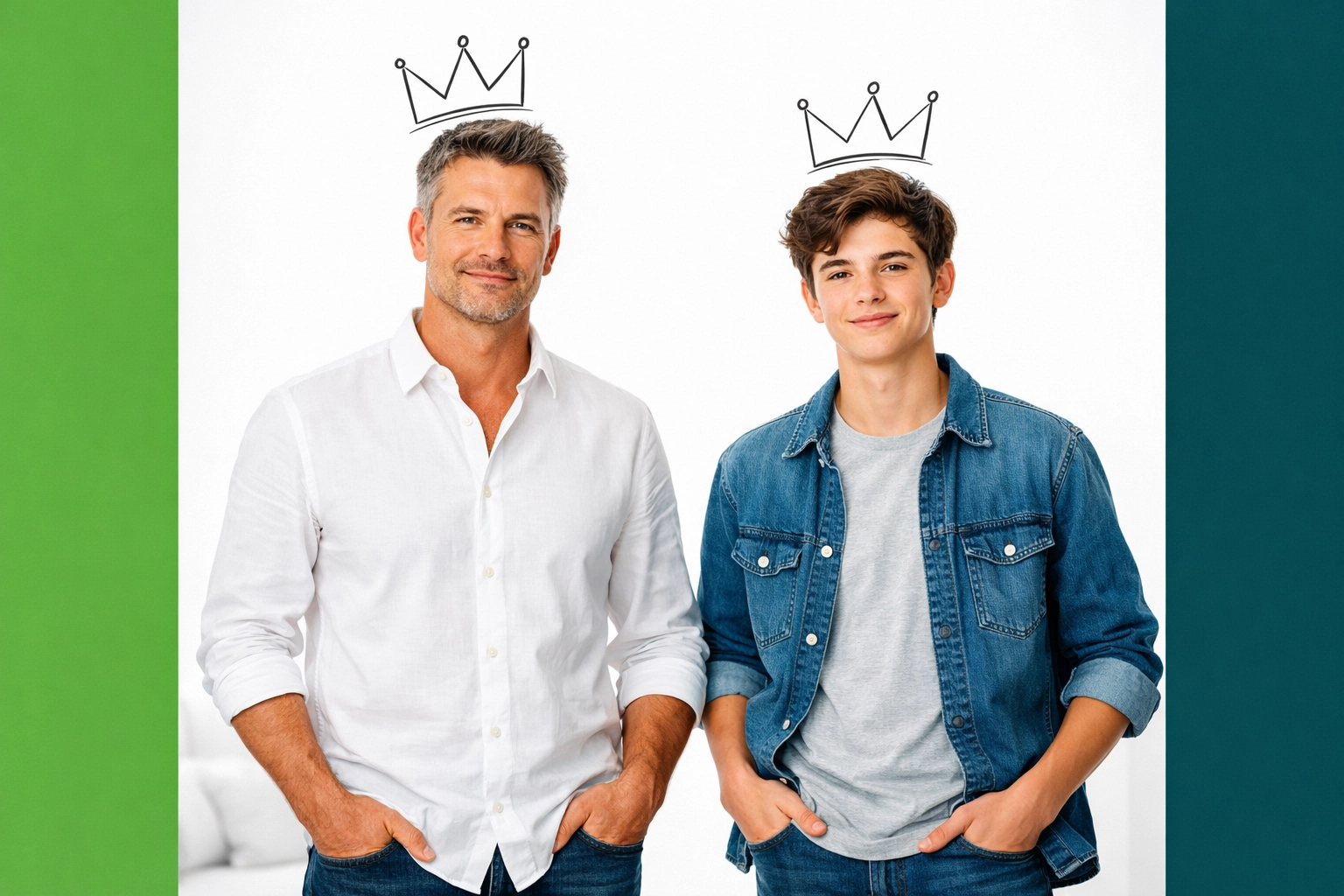
We aren't just raising children; we are raising the future leaders of our families, churches, and communities.
A leader without self-awareness is a liability. But a leader who knows their strengths, acknowledges their weaknesses, and manages their emotions is a force for good.
In Proverbs 20:5, it says: "The purpose in a man's heart is like deep water, but a man of understanding will draw it out."
Your job as a parent is to help your child draw out that deep water.
It doesn't happen by accident. It happens by design.
And it starts with five minutes.
At Empower Kidz and Teenz Academy, we believe that life skills are not optional: they are essential.
We know you're busy. We know the world feels loud. That’s why we’ve created the Complete Life Skills Platform, a comprehensive bundle of 14 courses for only £19.99.
From emotional intelligence and self-awareness to financial literacy and digital safety, we provide the tools you need to steward your child’s future effectively.
Don't leave their character development to chance or to the internet.
Take the next step in empowering your child today.
It’s not just about raising kids who survive the world; it’s about raising kids who are equipped to change it.
Let’s start those five minutes today. Your child’s future self will thank you.






Comments are closed