
Your teenager spends an average of seven hours online every day.
Seven hours navigating a digital world that didn’t exist when you were growing up, a world filled with opportunities and dangers that most parents don’t fully understand.
Here’s the truth: online safety isn’t just about installing parental controls. It’s about equipping your teen with the wisdom, discernment, and biblical principles they need to navigate the internet with confidence and integrity.
And as Christian parents, we have a responsibility that goes deeper than just blocking inappropriate websites.
We’re called to raise digital disciples.
So let’s talk about the seven essential digital safety skills every teen needs, skills that blend technical awareness with scriptural wisdom.

Your teen needs to understand that personal information is sacred territory.
Passwords, home addresses, phone numbers, school locations, financial details, these aren’t just data points. They’re digital keys to your family’s safety and your teen’s future.
Teach them this simple rule: If you wouldn’t shout it in a crowded shopping centre, don’t post it online.
The Bible tells us to be “as shrewd as snakes and as innocent as doves” (Matthew 10:16). That means understanding the risks while maintaining pure intentions.
Here’s what your teen should never share publicly:
Have a conversation this week: “What information do you think strangers could use to find you or harm you?”
Let them think critically about their digital footprint.
Remember when Jesus went into the wilderness for forty days? He demonstrated something powerful: self-control in the face of temptation.
Your teen needs that same muscle, especially online.
Self-regulation isn’t about you controlling their screen time forever. It’s about coaching them into internal discipline.
Start with intentional use:
Ask your teen: “What do you want to accomplish online today?”
This simple question transforms passive scrolling into purposeful engagement.
Ephesians 5:15-16 reminds us to “be very careful, then, how you live, not as unwise but as wise, making the most of every opportunity.” Digital time is no exception.
That’s stewardship, not restriction.

Here’s something that will shock your teenager: everything they post is permanent.
Even “disappearing” messages can be screenshotted. Even deleted posts can be archived.
Your teen’s digital footprint is forming their future, university applications, job interviews, relationships, ministry opportunities.
What they post at 14 shapes who they become at 24.
Talk to your teen about digital citizenship as character in action. Their online choices reflect their values, their integrity, their faith.
Would they be comfortable with their youth pastor seeing that comment? Their future employer? Jesus Himself?
Proverbs 22:1 says, “A good name is more desirable than great riches.” That includes their online name.
Encourage them to ask before posting: “Does this reflect who I want to be?”
Not all content is created equal, and your teen needs to understand that.
Some videos energise and inspire. Others drain, discourage, or trigger comparison and anxiety.
Media literacy means recognising the emotional impact of what you consume.
Teach your teen to become an intentional consumer, not a passive absorber.
After watching content, ask them: “How did that make you feel? Did it build you up or tear you down?”
This isn’t about sheltering them from the world. It’s about equipping them to filter the world through a biblical lens.
Philippians 4:8 gives us the ultimate content filter: “Whatever is true, whatever is noble, whatever is right, whatever is pure, whatever is lovely, whatever is admirable, if anything is excellent or praiseworthy, think about such things.”
That applies to Instagram reels, YouTube videos, and TikTok trends too.

Here’s where faith meets the digital age.
Stealing isn’t just shoplifting, it’s downloading pirated music or streaming illegal content.
Lying isn’t just face-to-face deception, it’s curating a false persona on social media.
Gossip isn’t just schoolyard whispers, it’s spreading rumours in group chats.
God’s commandments don’t stop at the screen.
Help your teen understand that biblical principles apply everywhere, including online spaces.
When they’re tempted to share someone else’s embarrassing photo, remind them of the Golden Rule (Matthew 7:12).
When they consider downloading copyrighted material without paying, discuss what it means to honour others’ work (Exodus 20:15).
Digital discipleship means living out your faith in every space, physical and virtual.
This one might make your teen uncomfortable, but it’s non-negotiable.
Accountability isn’t punishment. It’s protection.
From the beginning, establish that family devices come with family accountability. You’ll know passwords to their accounts. You’ll follow their social media. You’ll have open conversations about what they’re seeing and experiencing online.
This isn’t about distrust, it’s about discipleship.
Proverbs 27:17 says, “As iron sharpens iron, so one person sharpens another.” Accountability sharpens character.
Frame it this way: “I love you too much to let you navigate the internet alone. We’re in this together.”
If your teen knows you’re watching with love, not suspicion, they’ll make better choices when you’re not looking.
And that’s the goal, internal integrity, not external control.
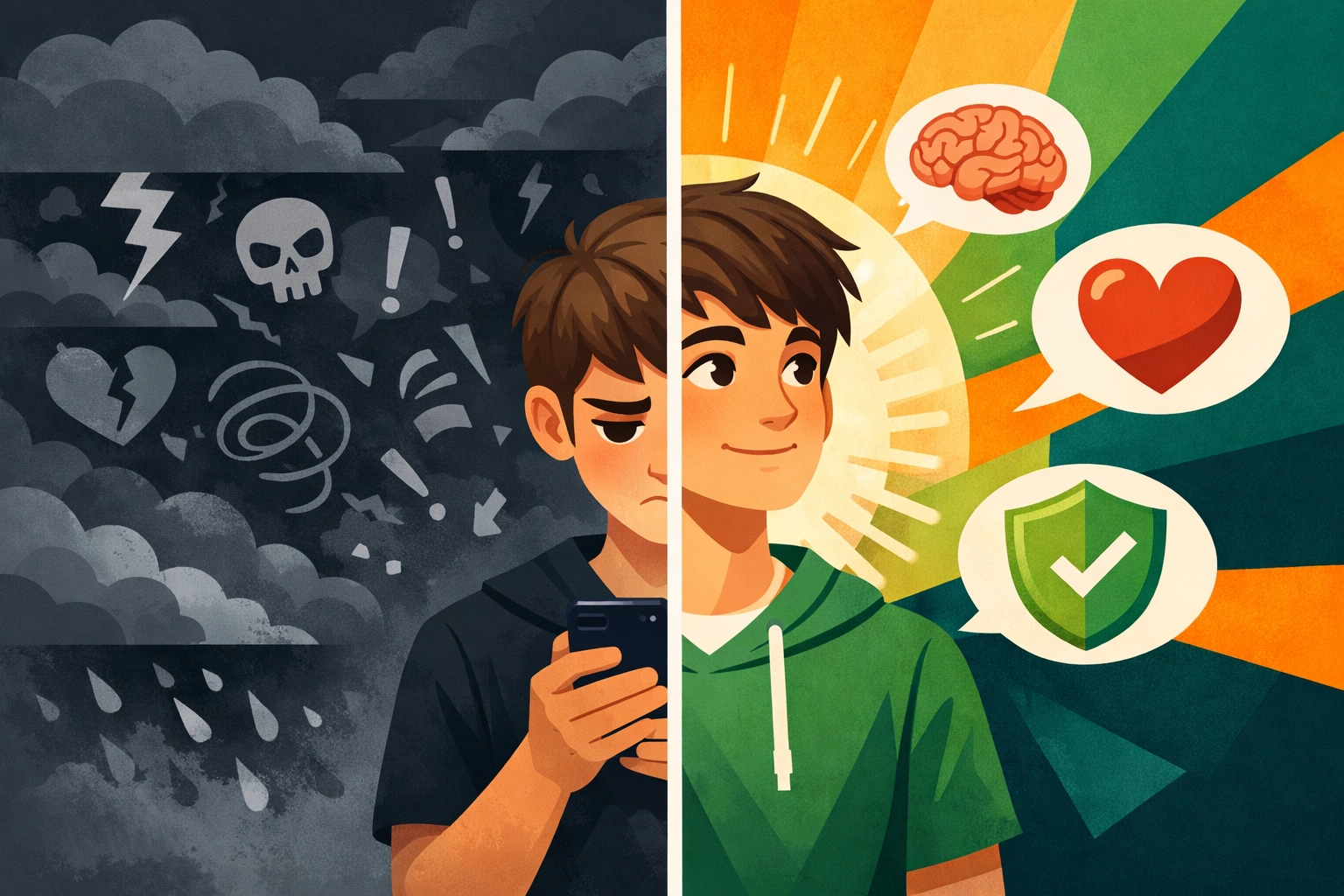
Despite your best efforts, your teen will encounter inappropriate content.
A friend will send an inappropriate meme. An algorithm will suggest something questionable. A pop-up ad will appear.
What matters is what they do next.
Train your teen to come to you immediately, without fear of punishment.
Tell them: “If you see something that makes you uncomfortable, tell me. We’ll figure it out together. You won’t be in trouble for being honest.”
Remind them that God sees everything (Proverbs 15:3), and that coming to you is an act of courage, not weakness.
When they do come to you, respond with calm guidance: not panic or shame.
Help them process what they saw through a biblical lens. Discuss why it’s harmful. Pray together. And adjust protections as needed.
This builds trust: and trust is the foundation of digital safety.
Here’s the heartbeat of Christian digital parenting: protection requires both guarding and growing.
Parental control apps like Google Family Link, Qustodio, and Circle are helpful: but they’re not enough.
Technical tools can guard. Only discipleship can grow.
Your teen needs both the boundaries of protection and the wisdom of biblical decision-making.
Because one day, they’ll be out of your house, with unlimited internet access and no screen time limits.
Will they be ready?
That’s the question Christian parenting must answer.
At Empower Kidz and Teenz Academy, we’ve designed the Complete Life Skills Bundle to help parents like you raise teens who navigate the digital world with wisdom, integrity, and faith.
Our Digital Etiquette course covers everything from online reputation management to biblical ethics in digital spaces: giving your teen the practical skills and spiritual foundation they need.
For just £19.99/month, you’ll get access to our complete library of courses, including digital safety, financial literacy, self-awareness, and more.
This isn’t just education. It’s equipping your teen for life.
👉 Get the Complete Life Skills Bundle and start building digital confidence today.
Have questions? Call our team: Rachel at +44 121 823 1456 or reach out via WhatsApp at https://wa.me/447361653024.
Your teen’s digital safety isn’t optional: it’s essential.
Let’s raise a generation of digital disciples together.







Comments are closed