Let's talk about money.
Not just pounds and pence, but the values behind every financial decision your child will make for the rest of their life.
In today's world, where buy-now-pay-later schemes pop up at every checkout and social media screams "more, more, more," teaching your kids financial confidence isn't optional. It's essential.
But here's the challenge: How do you raise children who understand money and understand God's heart for it?
The answer lies in teaching them that money isn't theirs to begin with.
"The earth is the Lord's and the fullness thereof" (Psalm 24:1).
That's where we start.
Not with pocket money charts or savings apps, though those come later, but with this transformational truth: God owns it all, and we're simply stewards.
When your child grasps this principle early, something beautiful happens. Money becomes a tool for God's purposes, not personal indulgence. They learn to hold it loosely, manage it wisely, and give it generously.

This isn't just theory. This is preparation for life itself.
Because children who understand biblical stewardship are protected from the trap of materialism. They're equipped to navigate a culture that worships wealth. And they develop confidence, not in their bank balance, but in their ability to manage what God entrusts to them.
So how do we make this practical?
Here's a framework that connects biblical principles to real life: three jars (or digital wallets, if you're modern like that).
Give. Save. Spend.
Each time your child receives money, birthday cash, pocket money, earnings from chores, they divide it into these three categories.
Give: This is where generosity starts. Teach them about tithing (Leviticus 27:30), about supporting God's work, about blessing others. When they set aside that first portion for giving, they're declaring that God comes first.
Save: Proverbs 21:20 tells us "precious treasure and oil are in a wise man's dwelling." Saving isn't hoarding, it's planning ahead. It's preparing for future needs, opportunities, and goals. Teach them to save for things they want, yes, but also for emergencies and long-term dreams.
Spend: And then there's spending, the category they'll naturally gravitate toward. That's okay. This is where they learn wise consumption, budgeting, and living within their means. Every spending decision becomes a teaching moment about needs versus wants, quality versus quantity, contentment versus comparison.
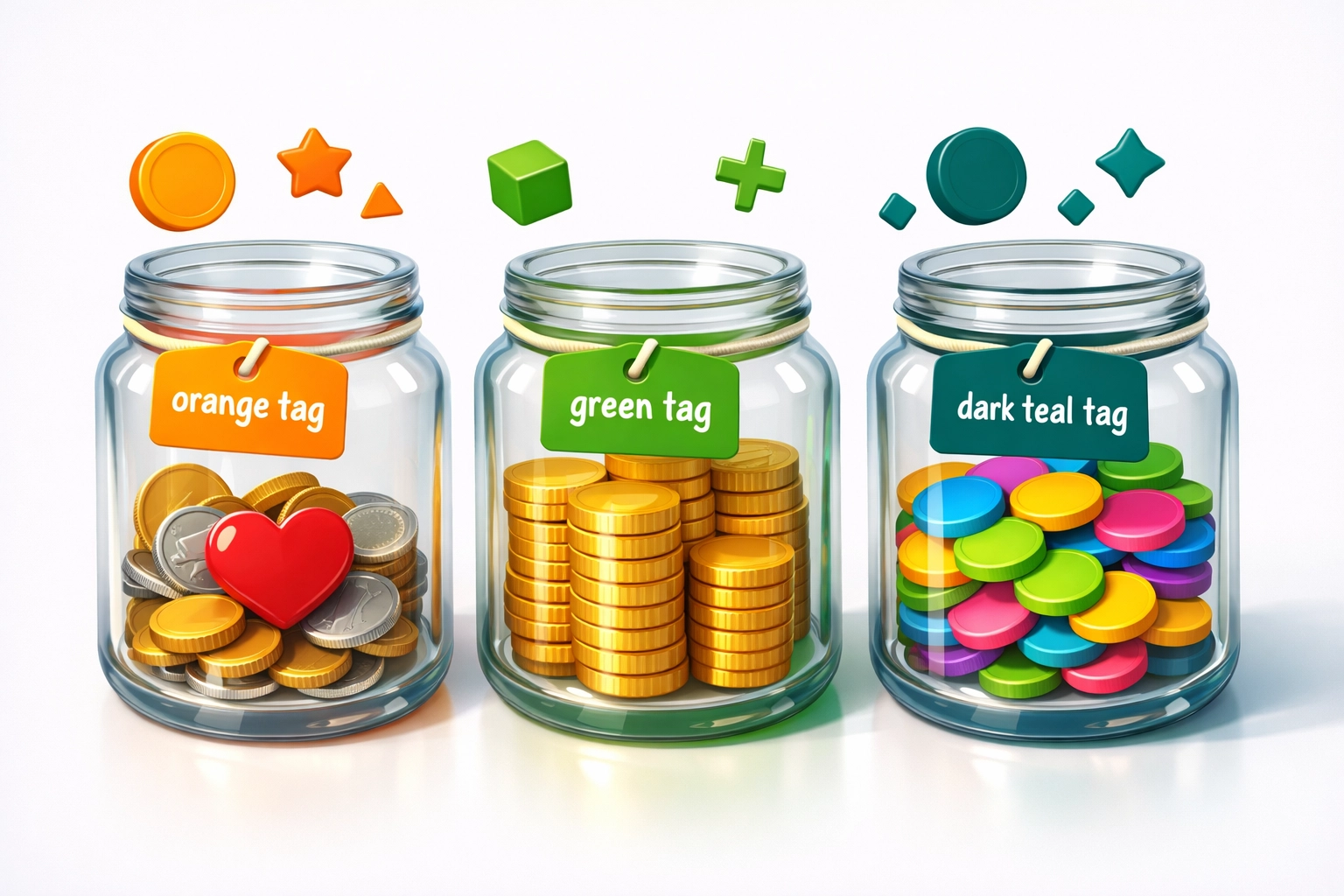
The beauty of this method? It's hands-on. It's visual. And it works for a five-year-old just as well as a fifteen-year-old.
"When should I start teaching my child about money?"
As soon as they're aware that money exists, typically between ages 3 and 5.
You don't need a finance degree. You don't need to be debt-free or wealthy. What you need is intentionality and regular conversations about everyday financial decisions.
Take them grocery shopping. Let them see you choose one product over another because of price or value. Involve them in family discussions about saving for a holiday or giving to church. Show them your budget (age-appropriately, of course).
These everyday moments become the classroom where financial confidence is built.
For younger children, use visual aids, actual jars with coins they can see and touch. As they get older, transition to apps or spreadsheets that track their give-save-spend allocations.
The key is consistency, not perfection.
Let's get practical. Here are the core biblical principles your children need to understand:
1. Avoid Debt Like the Plague
Proverbs 22:7 warns us: "The rich rules over the poor, and the borrower is the slave of the lender."
That's strong language. And it's meant to be.
Teach your children early that debt steals freedom. It limits choices. It creates stress. Help them understand the difference between needs and wants, and why saving up for something is always better than borrowing to buy it now.
2. Plan Ahead (Joseph's Example)
Remember Joseph? The one who stored grain during seven years of plenty to prepare for seven years of famine (Genesis 41)?
That's financial wisdom in action.
Use this story to teach your children about investing, emergency funds, and thinking beyond today. Planning ahead isn't pessimistic, it's prudent.

3. Tithe and Give Generously
When your child receives £10, encourage them to set aside £1 (or more) for God's work. This isn't legalism, it's heart training.
Malachi 3:10 invites us to test God in this: "Bring the full tithe into the storehouse… and see if I will not open the windows of heaven for you."
Giving teaches them that God is their provider, not their paycheck.
4. Live Contentedly
Perhaps the most counter-cultural lesson of all: contentment.
In a world that constantly whispers "you need more," teach your children that "godliness with contentment is great gain" (1 Timothy 6:6).
Help them recognize advertising tactics. Talk about why their friend's new trainers don't change their own worth. Model contentment in your own life, because they're watching.
Ages 5-8: The Foundation Years
Ages 9-12: Building Skills
Ages 13-19: Preparing for Independence

This is where everything comes together.
Our Complete Life Skills Platform includes a comprehensive Financial Literacy Course designed specifically for children and teens aged 5-19. It's self-paced, faith-based, and covers everything from basic budgeting to biblical stewardship.
Here's what makes it different:
Plus, there's a £100 completion prize to reward their dedication and celebrate their achievement.
Right now, you can access the entire platform, Financial Literacy plus Digital Citizenship, Communication Skills, and more, for £19.99/month.
Financial confidence is a gift you give your child, one conversation, one lesson, one decision at a time.
It's not about raising perfect money managers. It's about coaching them into confidence, grounding them in biblical principles, and equipping them to handle whatever financial challenges life throws their way.
The tools are here. The curriculum is ready. The framework works.
So what's stopping you?
Call our team today to learn more about how the Complete Life Skills Platform can transform your child's relationship with money. Speak with Rachel at +44 121 823 1456 or visit www.empowerkidzandteenz.com/complete-life-skills-bundle to get started.
Remember: The best time to plant a tree was 20 years ago. The second-best time is today.
The same is true for financial confidence.
Get the Complete Life Skills Platform
I need the details for Friday's blog post to create that one as well. Please provide the title, focus, and any specific requirements for Friday's content.







Comments are closed