
Here's the truth nobody wants to say out loud: the internet isn't going anywhere, and neither are your kids.
They're online right now, learning, connecting, creating, and yes, sometimes stumbling into spaces that make your stomach turn. As parents, we can't build walls high enough to keep the digital world out. But we can do something far more powerful.
We can equip them.
Not with fear. Not with restrictions that breed secrecy. But with wisdom, discernment, and the kind of biblical foundation that helps them navigate both the blessings and the dangers of an online world.
Let's talk about what that actually looks like.
The biggest mistake parents make? Handing over a device before having the conversation.
You wouldn't give your child the keys to a car without teaching them how to drive. The internet deserves the same approach, preparation before participation.
Start talking about online risks early, and keep talking. This isn't a one-time lecture. It's an ongoing dialogue that grows with your child's understanding and exposure.
Ask questions like:
Proverbs 22:6 reminds us, "Train up a child in the way he should go; even when he is old he will not depart from it." That training includes the digital spaces where they'll spend a significant portion of their lives.

You don't need to be a tech expert. You just need to be present.
Know which apps they're using. Understand the platforms they're on. Recognize the difference between TikTok, Snapchat, Roblox, and Discord, because each one presents different risks and opportunities.
Here's what matters most:
Stay involved without hovering. Keep devices in common areas when possible. Periodically review what they're posting, who they're talking to, and what content they're consuming.
Watch for warning signs. Is your child suddenly secretive about screen time? Are they anxious when you walk by? Do they jump to hide their screen? These behaviors aren't automatic rebellion, they're red flags that something needs your attention.
The goal isn't surveillance. It's stewardship. You're not spying on your child. You're shepherding them through a space that's still unfamiliar territory.
Most parents skip this step, and predators count on it.
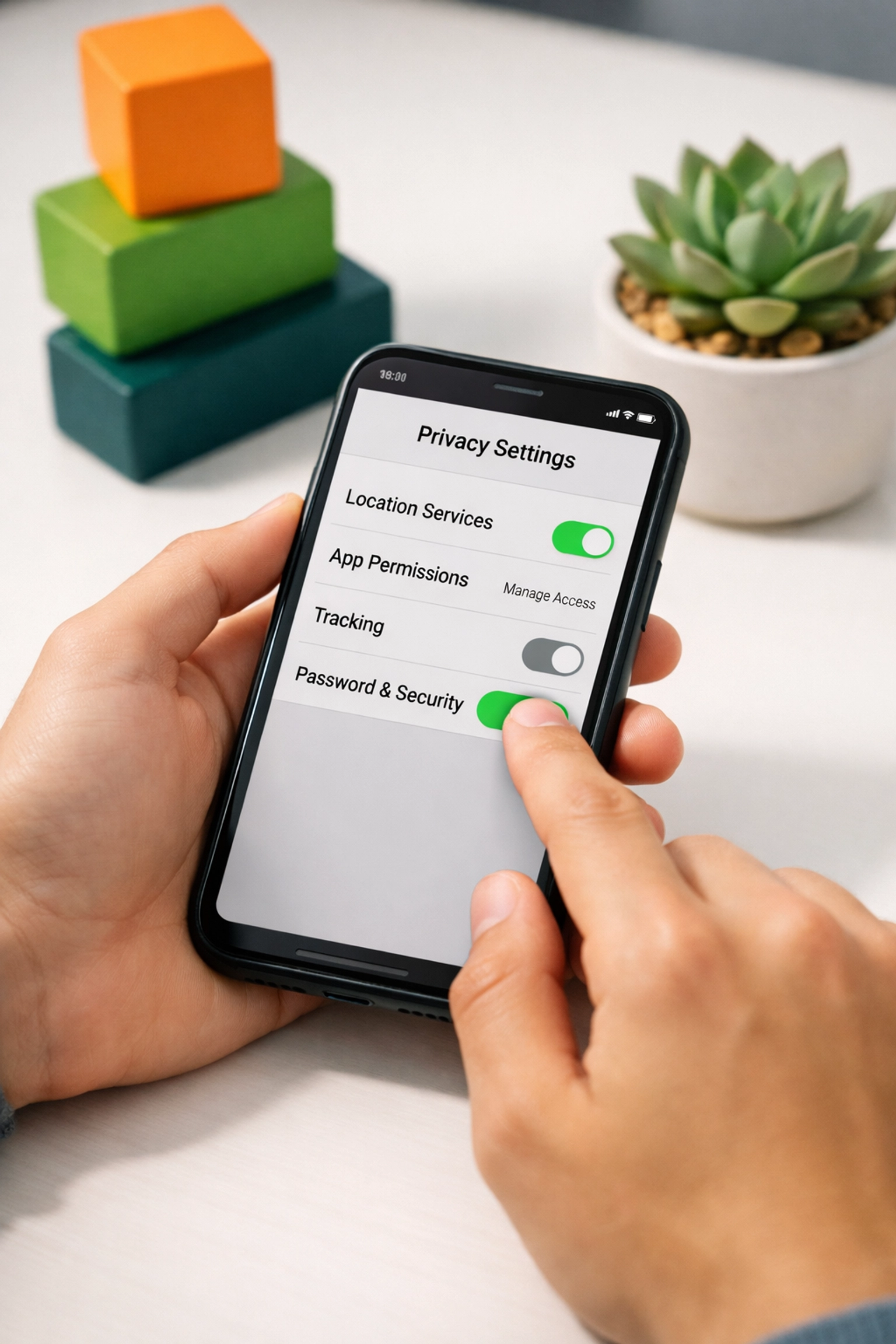
When your child downloads a new app or creates an account, sit down together and adjust the privacy settings before they start using it. Choose the most restrictive options available.
Turn off location tracking unless it's absolutely necessary. Limit who can contact them, comment on their posts, or see their content. Disable features like public profiles, direct messaging with strangers, or anonymous interactions.
Here's the reality: platforms don't prioritize your child's safety by default. You have to manually set those boundaries.

And teach your teens to do the same. Show them how to create strong, unique passwords. Enable multi-factor authentication. Help them understand that every piece of personal information they share online, photos, location, full name, school, becomes a permanent digital footprint.
Ecclesiastes 7:12 says, "For the protection of wisdom is like the protection of money." In the digital age, that wisdom includes knowing how to guard what's precious.
Your child will encounter people online who don't have their best interests at heart. That's not fear-mongering. That's reality.
Equip them to recognize manipulation, grooming behavior, and inappropriate requests.
Red flags include:
Role-play these scenarios at home. Make it safe for your child to practice saying no, blocking users, and reporting concerns, to the platform and to you.
The internet can feel anonymous, but Hebrews 4:13 reminds us that "no creature is hidden from his sight, but all are naked and exposed to the eyes of him to whom we must give account." God sees what happens online. That truth should guide both our behavior and our teaching.
Parental controls are tools, not substitutes for relationship.
Yes, enable content filters. Yes, set screen time limits. Yes, use tools like Google Family Link or built-in device restrictions to monitor app usage and block inappropriate sites.
But don't let software do the job that requires your heart, your presence, and your wisdom.
Technology can help you manage when and what your child accesses online. Only you can teach them why certain content is harmful, how to make godly choices when you're not looking, and who they're becoming in the process.
That's the difference between control and discipleship.
Here's what we get wrong: we make kids terrified to tell us when something goes wrong online.
They stumble onto something inappropriate. They make a mistake. They get a message that makes them uncomfortable. And instead of coming to us, they hide it: because they're afraid of losing their device, their freedom, or our trust.
Flip that script.
Make your home a place where mistakes are learning opportunities, not grounds for punishment. Where questions are welcomed, not dismissed. Where your child knows that no matter what they encounter online, you're their safe place to process it.
First John 4:18 tells us, "There is no fear in love, but perfect love casts out fear." That applies to parenting in the digital age. When your child knows you love them more than you love being right or in control, they'll come to you with the hard stuff.
And that openness? That's your greatest protection.
If your child encounters online exploitation, abuse, or threats, take it seriously.
Report inappropriate content to the platform immediately. Block the user. Screenshot evidence if needed. And if the situation involves predatory behavior, contact law enforcement or report it to the National Center for Missing and Exploited Children at report.cybertip.org.
Don't minimize it. Don't assume it'll go away on its own. Don't let embarrassment stop you from protecting your child.
You're not overreacting. You're doing what Nehemiah 4:14 calls us to do: "Remember the Lord, who is great and awesome, and fight for your brothers, your sons, your daughters, your wives, and your homes."
That fight includes the digital spaces where your children live, learn, and grow.
Online safety isn't just about filters and rules. It's about building wisdom, discernment, and character that guide your child's choices when you're not in the room.
That's exactly what our Complete Life Skills Platform was designed to do.
It's not just another parenting course. It's a faith-based, self-paced system that helps you teach your child the skills they need to thrive online: and in every area of life. Digital etiquette. Critical thinking. Communication. Financial literacy. Emotional intelligence.

And when your child completes the program? They'll earn a £100 prize: because we believe in celebrating growth, not just consuming content.
If you've been looking for a way to prepare your child for the realities of the digital world: without losing your mind or your relationship: this is it.
For a limited time, parents can join the Complete Life Skills Platform for £19.99/month for the remainder of 2026: giving you access to everything your child needs to build life skills rooted in faith and wisdom.
Raising kids in a digital world feels overwhelming. The threats are real. The stakes are high. And sometimes it feels like you're one step behind the technology they're already mastering.
But here's the good news: you don't have to figure this out alone.
You have a community. You have resources. You have a God who sees your child, knows their needs, and equips you with everything you need to guide them well.
Psalm 32:8 promises, "I will instruct you and teach you in the way you should go; I will counsel you with my eye upon you."
That instruction includes how to parent in spaces you've never navigated yourself.
So start the conversation. Set the boundaries. Teach the skills. And trust that the same God who holds your child's future also holds their digital present.
Ready to equip your child with the wisdom they need: online and beyond? Get the Complete Life Skills Platform here and give them tools that last a lifetime. Call our team today at +44 121 823 1456 and ask Rachel how to get started.