In a world that is constantly shouting at our children, telling them who they should be, what they should wear, and how they should act, there is one quiet skill that acts as an anchor.
It’s self-awareness.
Most parents focus on grades or sports trophies, the outward markers of "success", but the real engine behind a thriving adult is character. And character doesn't just happen by accident. It is built, brick by brick, on the foundation of knowing oneself.
As a parent, you aren't just a caregiver; you are a coach. You are the one helping them decipher the map of their own heart.
Let’s talk about how we can turn "who am I?" from a scary question into an empowering journey. Here are 10 things every parent should know about building character through self-awareness activities.
1. Self-awareness is the heartbeat of emotional intelligence
Before a child can manage their anger or share their toys, they have to recognize what they are feeling. It sounds simple, doesn't it? But for a child, emotions can feel like a chaotic storm.
Character begins with the ability to pause and name the wind. When we teach a child to say, "I feel frustrated because I can’t get this block to stay," we are moving them from reactive behavior to conscious character.
Try this: Use a daily emotions check-in. It isn't just about "happy" or "sad." Dig deeper. Ask them to pick a color for their mood. Why is today yellow? Why is it grey?
2. The "Me Tree" helps identify God-given roots
Character isn't about being perfect; it’s about understanding the unique design God placed inside of them. In Psalm 139:14, we are reminded that we are fearfully and wonderfully made.
Helping a child identify their strengths is a form of spiritual stewardship. If they don't know they are resilient, they won't lean into that resilience when life gets hard.
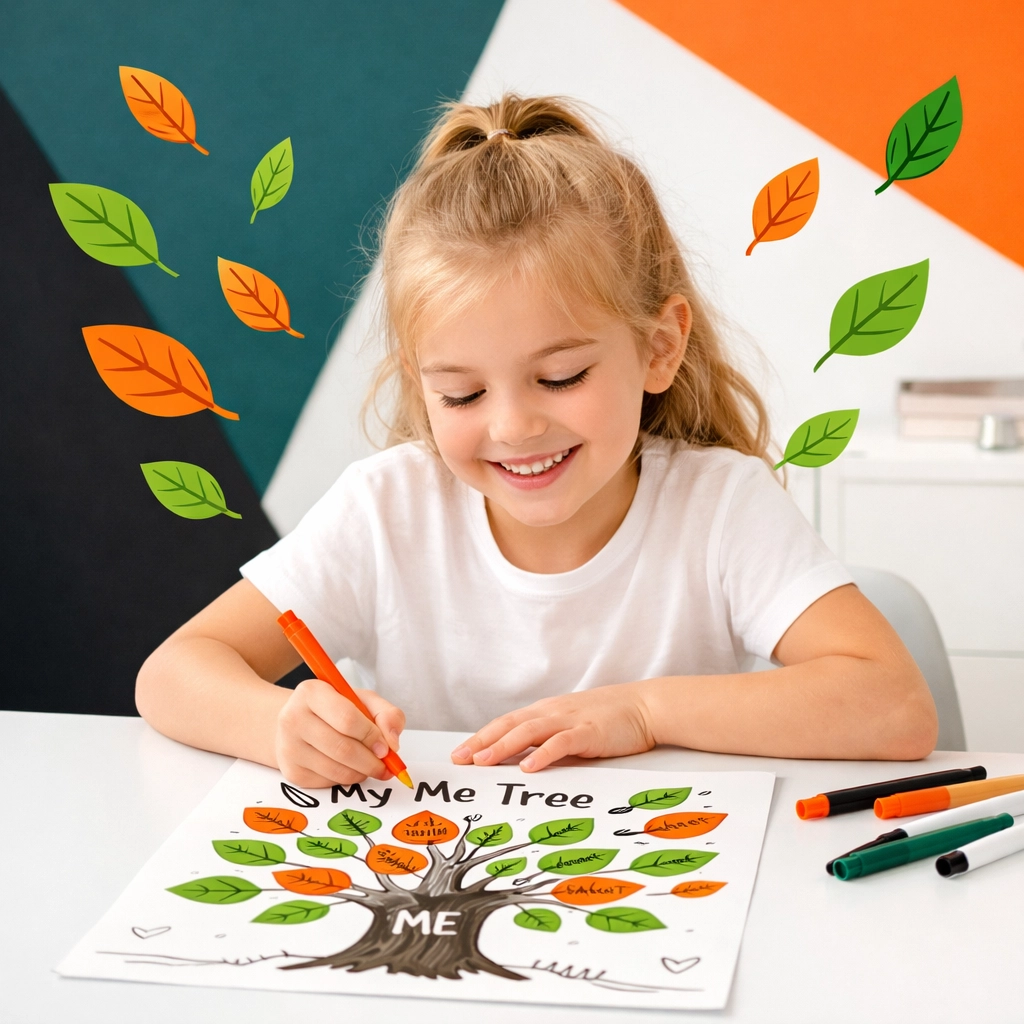
Try this: Create a "Me Tree." Have your child trace their hand and arm to make the trunk and branches. On the roots, write their values (honesty, kindness). On the leaves, write their strengths (good at math, helpful, funny).
3. Character is built in the mirror
Self-awareness requires looking at the person in the mirror, literally and figuratively. Children often don't realize how their body language or facial expressions affect others.
Character development involves understanding our impact on the world around us. Are we bringing light into a room, or are we bringing a cloud?
Try this: The Mirror Game. Sit across from your child and mimic their expressions. Then, have them mimic yours. Discuss how a "scrunched-up face" might make a friend feel versus a "relaxed face." It’s not about policing their expressions; it’s about coaching them into confidence regarding how they present themselves.
4. Vision boards are not just for adults
We often think of vision boards as tools for entrepreneurs, but for a child, a vision board is a character roadmap. It helps them answer the question: Who do I want to be?
When a child visualizes their goals, whether it’s learning to ride a bike or being a better friend, they are practicing self-reflection. They are identifying the gap between where they are and where they want to grow.
Try this: Grab some old magazines and a poster board. Ask them to find images that represent the kind of person they want to be this year. Do they want to be brave? Find a picture of a mountain climber. Do they want to be kind? Find a picture of people hugging.
5. Journaling is the ultimate "brain dump" for character
The world is noisy. Our kids need a place where they can be quiet with their thoughts. Journaling isn't just for teenagers with secrets; it's a tool for self-discovery at any age.
By putting pen to paper, kids learn to process their experiences. They move from "life happened to me" to "this is how I responded to life." That shift is where character is born.
Try this: Use prompts that focus on growth. "What is one thing that was hard today?" "How did I show courage?" This isn't about writing a novel; it’s about the stewardship of their own story.
6. Mistakes are data, not definitions
One of the most important things a parent can do is decouple a child’s mistakes from their identity. Self-aware children know that failing at a task doesn't make them a failure.
Character is forged when we teach kids to analyze their mistakes without shame. "Okay, the tower fell. What did we learn about the base?" is a character-building conversation.
Try this: Model this yourself. When you burn dinner or lose your keys, narrate your self-awareness. "I'm feeling stressed because I lost my keys. I need to take a breath and think about where I last had them."

7. "Strength Spotting" builds internal value
In today's digital world, children are constantly comparing their "behind-the-scenes" with everyone else’s "highlight reel." This is a recipe for low self-esteem.
True character comes from an internal sense of worth, not external validation. We must help them find their "Internal North Star."
Try this: Every week, have a "Strength Spotting" session. Point out a specific character trait you saw in them that had nothing to do with achievement. "I noticed how you waited patiently for your turn. That showed great self-control." You can find more tools for this in our Complete Life Skills Platform.
8. Boundaries are a sign of self-respect
A child who is self-aware knows their limits. They know when they are overstimulated, when they need a break, and when someone is crossing a line.
Teaching a child to say "no" or "I need space" is an essential life skill. It’s about teaching them that their personhood is a gift they are responsible for protecting.
Try this: Role-play different scenarios. "What do you do if a friend wants to play a game you aren't comfortable with?" Give them the scripts they need to honor their own boundaries.
9. The power of "Yet" creates a growth mindset
Character is often a matter of perspective. A child who says "I can’t do this" is stuck. A child who says "I can’t do this yet" is self-aware enough to know they are in a process of growth.
This is the essence of biblical stewardship: taking what we have been given and multiplying it through effort and faith.
Try this: Whenever you hear "I can't," gently add the word "yet" to the end of their sentence. Make it a household rule.

10. Personal development is a lifelong journey
We often think of "character building" as something that ends when they move out. But self-awareness is a muscle that needs to be exercised forever.
As parents, we have to show them that we are also learning. We are also growing. We are also working on our character.
Are we coaching them, or are we just commanding them?
Building character isn't a one-time conversation; it's a culture you create in your home. It’s about giving them the tools they need to navigate the complexities of life with confidence and grace.
At Empower Kidz and Teenz Academy, we believe that life skills are not optional: they are essential. Whether it’s ICT training for the digital age or emotional intelligence for personal growth, we are here to partner with you.
We have designed the Complete Life Skills Platform to be your one-stop resource for raising well-rounded, self-aware, and confident children. For just £19.99, you get access to a wealth of training that goes far beyond the classroom. It’s not just about learning; it’s about transformation.
Give your child the gift of self-awareness. Give them the tools to build a character that lasts a lifetime.
Ready to equip your child for the real world?
Explore the Complete Life Skills Platform here
If you have questions about which course is right for your child’s age group or specific needs, don’t hesitate to reach out. We love talking to parents who are passionate about their child’s future.
Call our team (Rachel): +44 121 823 1456
WhatsApp us for quick questions: https://wa.me/447361653024
Remember, you aren't just raising a child; you are raising an adult. Let’s make sure they know exactly who they are.







Comments are closed